Belpunt
The Glass Bead GameBelpunt is the Designori family’s mountain cottage, set beside a lake among cliffs, where Joseph Knecht begins tutoring Tito after leaving Castalia. Arranged as a temporary place of secluded study, it becomes more than a residence: its cold, austere landscape marks Knecht’s first step into life beyond Castalia, while the lake is the setting for the morning swim that turns a promising teacher–pupil encounter into a fatal test of strength.
Setting and Arrangement
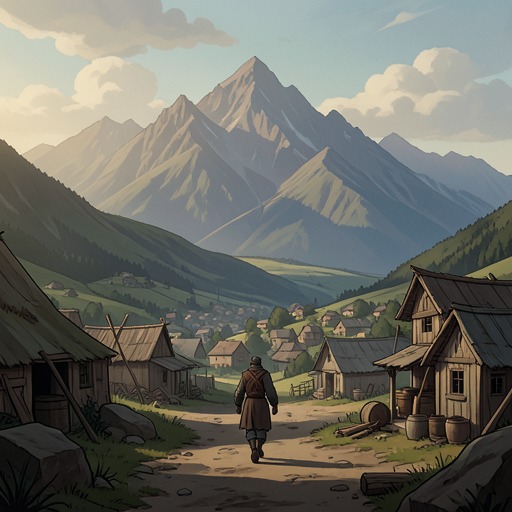
Plinio Designori prepares Belpunt as a retreat for Knecht and Tito. The family’s vacation cottage is pleasantly situated beside a mountain lake; an elderly servant has already gone ahead to put the place in order. Plinio expects the two to live there together, at least initially, because isolation might help them establish their new arrangement. Their stay is not intended to last indefinitely: the cottage can serve them only for a short time, at most until winter begins.
Plinio’s preparations reflect Knecht’s wishes. Tito’s mother is initially reluctant, but comes to understand the reasons for the plan and agrees to it. Tito himself loves Belpunt and the mountains, and raises no objection to going there. Plinio is eager to show Knecht an album of photographs, describing the cottage’s large farm kitchen and living room, its tile stove and arbors, and the nearby lake shore and waterfall. The domestic comforts promise a sheltered beginning, though the surrounding terrain will prove far less accommodating than the house.
Arrival and First Meeting
Before the move, Tito disappears from the family home, alarming Plinio. Knecht steadies him with breathing exercises, guiding him in a strict rhythm until Plinio can set aside his self-induced panic and listen to reason. In Tito’s room, Knecht discovers a note explaining that the boy has gone ahead alone to Belpunt. Tito wants one last journey before his freedom is restricted again, and resents the thought of making it under the supervision of a new teacher. Knecht accepts the explanation and decides to travel after him the next day.
Knecht refuses Plinio’s offer to accompany him. He reasons that Tito already has enough to contend with in meeting a new teacher; adding his father to the journey would not help. On the September drive from the lowlands toward the high mountains, the landscape changes with the road: fading summer gives way to autumn, and the route climbs through evergreen forest, past mountain streams, bridges, and isolated farmhouses into increasingly stony and austere country. The ride is beautiful, and Knecht’s good humor returns as he talks with the chauffeur, asks him to slow or stop for the scenery, and plays his little flute.
The cottage itself is tucked near the lake, among gray cliffs against which it scarcely stands out. Knecht senses its austerity and gloom, qualities in keeping with the rugged mountains. But Tito is waiting in the open doorway, wearing a colorful jacket and shorts. The sight reassures Knecht: whatever complications he had considered on the journey, the boy has arrived safely and is there to greet him. Tito apologizes for making him travel alone and says he trusted Knecht to understand why he had not brought his father. He has already let Plinio know he arrived safely.
A Beginning in the Mountains
The first evening is not given over to timetables or lessons. Knecht rests, then spends time with Tito, looking at the boy’s collections of mountain flowers and butterflies. He is more tired than he expects after the journey, and experiences giddiness, a strange emptiness in his head, and an irregular, weakened heartbeat. He hides his condition and stays with Tito until their agreed bedtime. The episode establishes a physical vulnerability that will matter the next morning, even as Knecht’s attention remains on the new relationship he has come to form.
At dawn, Knecht goes through the rear door and along the arcade connecting the house with the bath hut by the lake. The water lies motionless and gray-green beneath a steep cliff, its jagged crest still in shadow. The sun has risen behind it; small glints of light appear on the rock, and the coming sunrise promises to flood the valley. Knecht studies the scene with an attentiveness unlike his response to the previous day’s journey. The mountain world feels cool, grave, and strange: it does not meet people halfway or invite them, but scarcely tolerates their presence. He finds it significant that his first step into worldly freedom has brought him to this silent, cold grandeur.
Tito joins him in bathing trunks and points out that they have arrived at just the right moment to see the sun rise. The landscape offers no easy welcome, but the shared act of watching it gives teacher and pupil a first experience of companionship outside the usual structure of instruction. When Tito suddenly proposes that they swim across the lake before the sunlight reaches the far shore, the morning’s stillness gives way to an impulsive challenge.
The Lake and Its Consequence
Tito plunges into the water at once, leaping headfirst and swimming rapidly away across the blue-green surface. Knecht had not intended to bathe: the air and water are cold, and after the night’s illness swimming seems unwise. His weakness warns him to be careful. Yet the invitation carries the promise of a new rapport with his pupil, and he fears that refusing it would answer Tito’s comradely gesture with detached adult caution. He decides that meeting the discomfort directly may be better than yielding to it, strips off his dressing gown, takes a deep breath, and dives in at the same place as Tito.
Belpunt’s role in the novel therefore rests on a tension between refuge and exposure. The cottage is a deliberately secluded base for a new educational relationship, but the surrounding world cannot be managed like an orderly course of study: its cold, cliffs, and water impose their own demands. Here Knecht begins to answer the responsibilities of his new life through direct engagement with Tito, not merely by explaining or arranging it. The same choice that makes the encounter an act of trust and fellowship also brings his vulnerable body into the lake, giving the mountain retreat its decisive place in the conclusion of his story.